Bring fleet, frontline, and claims into one unified system delivering real-time visibility, coordinated action, and smarter decisions across your organization.
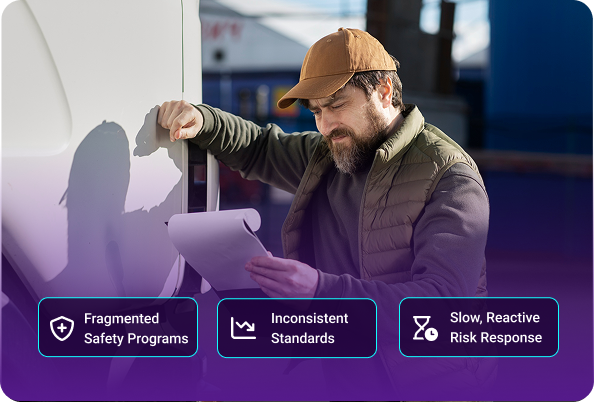
Fragmented systems, rising high-risk exposure, and inconsistent compliance leave critical signals buried across operations, delaying response, increasing incidents, and making it harder to prevent serious outcomes before they occur.
Take Control Before Risk Spreads Across Operations
Unify Enterprise Safety Signals
Connect fleet, frontline, and claims into one intelligent view.
Surface Emerging Risk Patterns
Reveal hidden risks early with predictive intelligence.
Drive Decisive Safety Action
Enable faster, coordinated decisions across all operations.
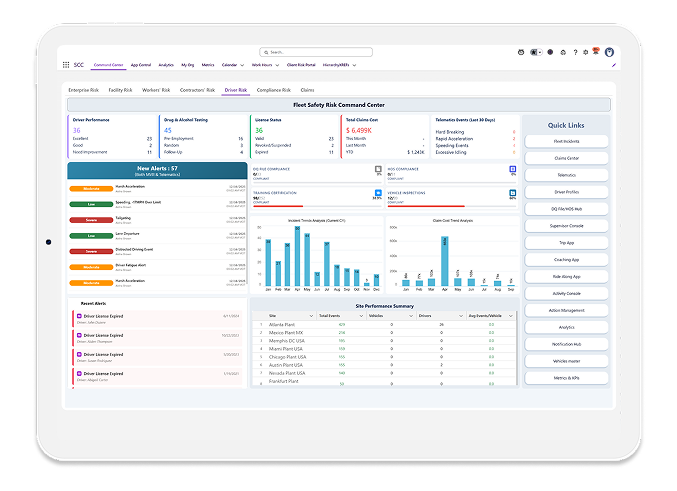
Proactive Fleet Risk Control
Unify driver and fleet data into a single system that identifies emerging risks early, drives timely interventions, and reduces incidents, costs, and operational disruptions.
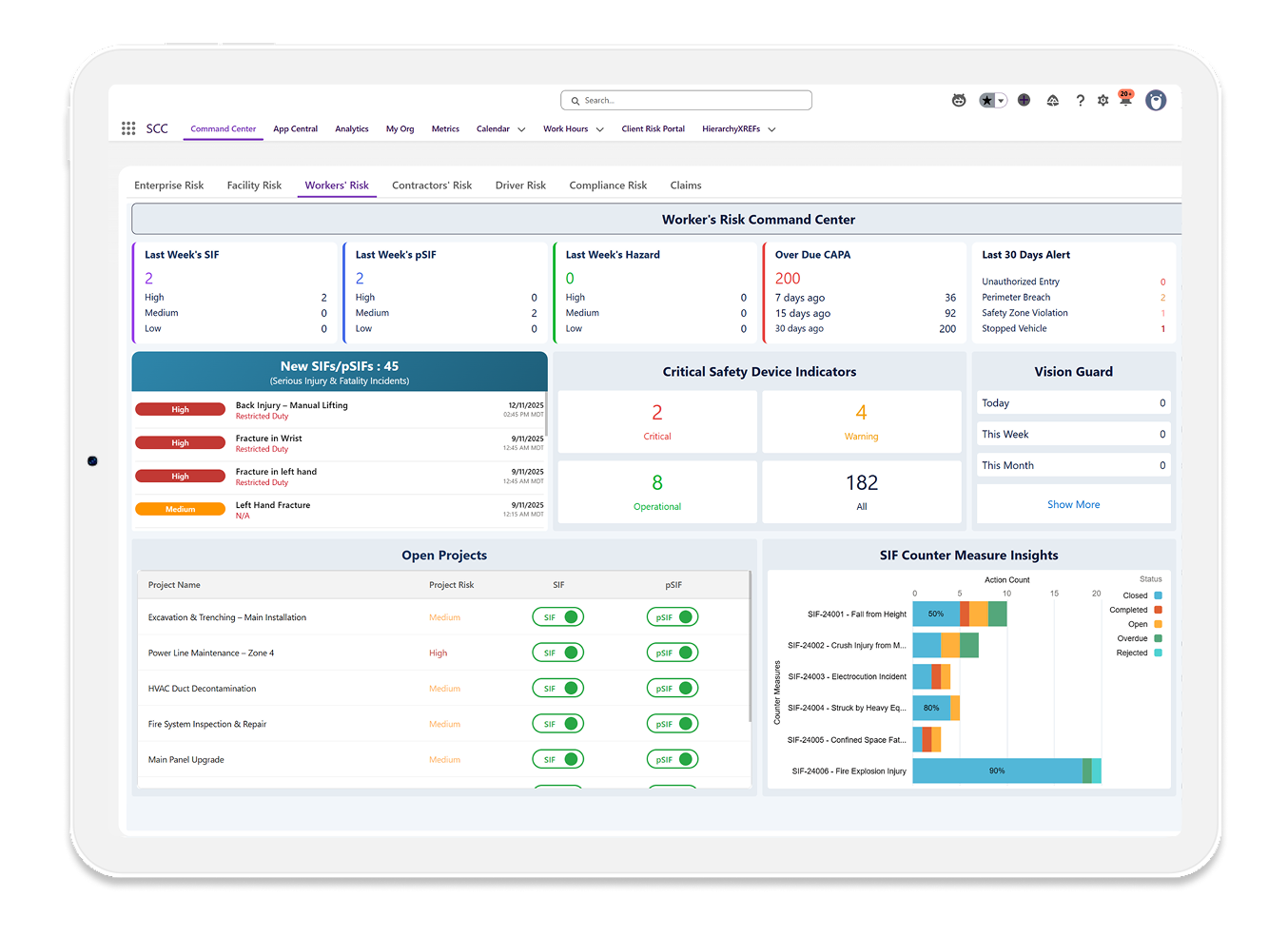
Connected Frontline Safety Intelligence
Bring frontline data into a single system that identifies early warning signals, drives preventive action, and reduces serious injuries while improving compliance and workforce safety.
Claims Intelligence, Unified and Actionable
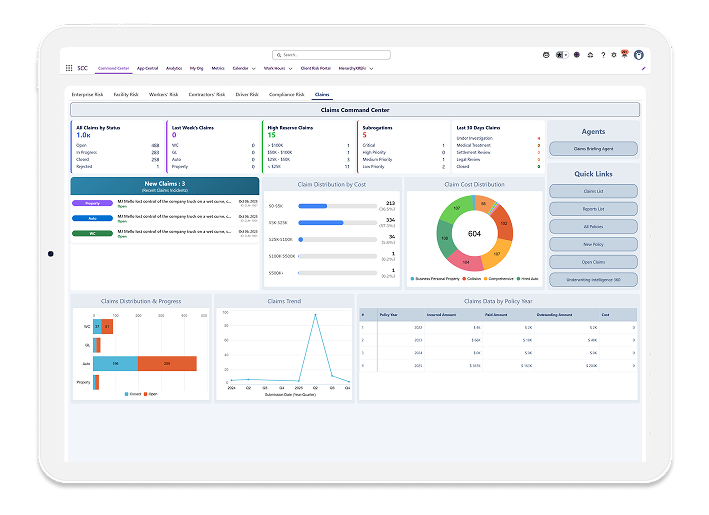
Centralize claims, policy data, documents, and communications into one system enabling real-time visibility, faster resolution, reduced claim costs, and prevention of repeat incidents.
The Results You Can Expect
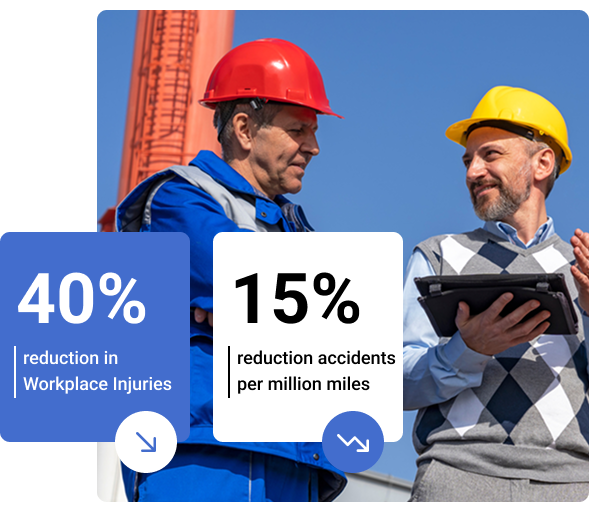
Fewer Incidents & Serious Injury and Fatality (SIF) Exposures
Organizations report significant reductions in preventable injuries and serious events when operational data is unified.
Stronger Compliance & Lower Risk Costs
Improved audit performance, fewer violations, and a measurable decrease in total cost of risk (TCOR).
Faster Response & Improved Decision-Making
Real-time intelligence accelerates corrective actions and strengthens operational consistency.
FAQ’s
What is a unified safety platform?
A unified safety platform connects fleet safety, worker safety, claims, compliance, inspections, and operational risk data into a single system. It helps organizations eliminate safety silos, gain real-time visibility into risk, improve decision-making, and reduce incidents across the enterprise.
Why do safety silos increase organizational risk?
Safety silos prevent organizations from seeing how risks are connected across departments, locations, and operations. When safety data is fragmented, hazards can go unnoticed, corrective actions may be delayed, and leaders lack the visibility needed to prevent incidents and improve performance.
How can organizations connect fleet safety and worker safety?
Organizations can connect fleet safety and worker safety by using a unified platform that brings together driver data, worker observations, inspections, incidents, claims, compliance records, and corrective actions. This creates a complete view of risk and enables more coordinated prevention efforts.
What is safety intelligence?
Safety intelligence is the use of connected data, analytics, and operational insights to identify risk, predict potential incidents, and support better safety decisions. It helps organizations move from reactive reporting to proactive risk prevention.
How do organizations reduce total cost of risk?
Organizations reduce total cost of risk by preventing incidents, improving compliance, strengthening corrective action management, and identifying risks before losses occur. A proactive safety strategy can help reduce injuries, claims, operational disruptions, and insurance-related costs.
What is serious injury and fatality (SIF) prevention?
Companies can help prevent serious injuries and fatalities by identifying high-risk exposures, monitoring leading indicators, strengthening safety controls, improving accountability, and focusing resources on the hazards most likely to result in severe outcomes.
What are the leading indicators of serious injury and fatality risk?
Leading indicators of serious injury and fatality risk often include high-risk behaviors, repeat safety observations, compliance gaps, near misses, equipment issues, unsafe work conditions, and unresolved corrective actions. Tracking these indicators helps organizations address risk before an incident occurs.
What data should be included in a safety management system?
A modern safety management system should include incident reports, inspections, audits, compliance records, training data, corrective actions, claims information, fleet safety data, worker observations, and operational risk indicators. Connecting these data sources provides a more complete view of risk.
What is Rhythm Unified Safety?
Rhythm Unified Safety is an enterprise safety intelligence solution that connects fleet safety, frontline worker safety, claims management, compliance, and operational risk data into one platform. It helps organizations improve visibility, strengthen decision-making, reduce risk, and support serious injury and fatality prevention.
How is Rhythm Unified Safety different from traditional safety software?
Unlike traditional safety software that focuses on a single function, Rhythm Unified Safety connects multiple safety disciplines into one platform. This unified approach helps organizations identify risks earlier, coordinate actions across teams, and improve overall safety performance.