


What Nearly 200 Fleet Businesses Taught Us About Risk, Insurance, Survival, and the Human Side of Safety
“I don’t know if we’re going to make it.” Those are not the words you expect to hear when the conversation begins with fleet safety. But through the SaferFleet™ journey, we heard different versions of the same concern from small fleet owners trying to understand insurance pressure, safety requirements, driver performance, maintenance issues, and what to fix first.
Many of these owners were not supported by large risk departments or teams of analysts. They were the fleet manager, safety manager, compliance manager, dispatcher, and sometimes the driver. They were not asking for another dashboard. They were asking for a path forward.
When Insurance Becomes Permission to Operate
Large companies may view commercial insurance as part of enterprise risk financing. A small fleet owner experiences it differently. Insurance is permission to operate.
Without coverage, the truck may not move. If the truck does not move, the load does not move. Revenue stops. Payroll becomes harder. Customers are affected. Jobs are at risk. For a small operator, a non-renewal is not paperwork. A major premium increase is not just a budget issue. It can determine whether the company remains viable.
That is the pressure many fleets are carrying while also dealing with distracted driving, nuclear-verdict concerns, driver availability, maintenance costs, regulatory expectations, and thin operating margins. More risk. More information. More expectations. But not always more resources.
Nearly 200 Businesses…But the Number Is Not the Real Story
It is tempting to focus on the milestone: nearly 200 fleet businesses and approximately 4.7 million miles monitored. That matters. But it is not the number we think about most.
Behind those businesses are roughly 1,750 drivers, dispatchers, fleet leaders, maintenance personnel, office employees, and families. An insurance decision that appears on a spreadsheet as a renewal, premium adjustment, underwriting condition, or risk score carries a very different meaning at a kitchen table.
Safety affects claims. Claims affect insurance. Insurance affects operations. Operations affect revenue. Revenue supports employment. Employment supports families and communities. Everything is connected.
The Industry Has Plenty of Data. It Needs More Decisions.
Most struggling fleet owners do not have a caring problem. They care deeply about their drivers, equipment, customers, safety, and the businesses they built. What they often have is a visibility problem, an action problem, or both.
They may receive information from motor vehicle records, telematics, electronic logging systems, roadside inspections, maintenance platforms, claims administrators, brokers, and federal safety data. But information alone does not answer the questions that matter most: What does this mean? What matters first? Who owns it? What should they do? How do we know it was resolved?
A red icon does not improve a fleet. An alert does not coach a driver. A report does not repair a vehicle. A score does not change behavior. Action changes risk, and action requires a system.
From “Tell Me My Score” to “Tell Me What to Do”
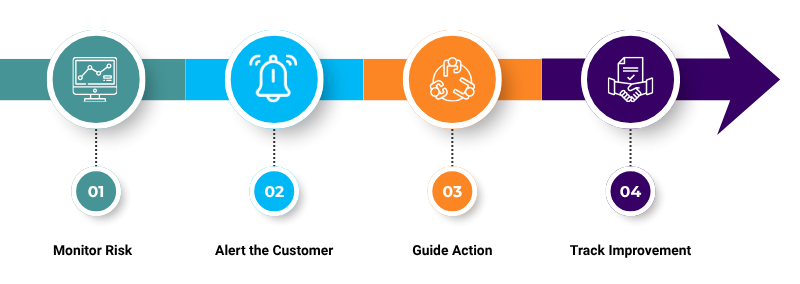
This is where risk technology must evolve. The dashboard is becoming the least interesting part. The real value is turning signals into decisions.
A better operating experience begins with simple direction: here are the three things requiring attention today; here is why each matters; here is who owns it; here is the recommended action; here is what proves closure; and here is whether the issue affects a driver’s or vehicle’s readiness to operate.
That changes technology from reporting infrastructure into operating infrastructure. The first tells people about risk. The second helps them control it.
What the Early Data Is Telling Us
We also believe storytelling must remain grounded in evidence. Early SaferFleet portfolio analysis has produced encouraging directional signals. In one matched analysis, claims frequency declined from approximately 13.02 claims per million matched miles to 8.31, a directional reduction of approximately 36.2 percent over the measurement period.
We are encouraged by that movement, but we also want to maintain analytical discipline. Matched populations can change, mileage coverage can vary, claims can develop over time, and correlation should not automatically be presented as causation. For an insurance executive, fleet owner, broker, risk leader, or underwriter, two defensible proof points are more valuable than ten attractive statistics that cannot survive scrutiny.
Insurability Is an Outcome of Daily Decisions
Fleet owners understandably focus on renewal season. But insurability is not created during the renewal meeting. It is built during the months before it – every trip, dispatch, inspection, maintenance decision, driver intervention, corrective action, and incident review.
The renewal meeting is often when accumulated evidence becomes visible. Instead of waiting for an insurer to say performance is unacceptable, fleets can manage toward insurability throughout the policy period: identifying high-risk drivers, correcting vehicle issues, reducing repeat violations, improving inspections, documenting actions, and proving what changed.
Technology Alone Did Not Create the Outcome
Technology is powerful, but it does not replace leadership, coaching, judgment, or the determination of a fleet owner. The businesses we have worked with were not waiting for someone else to save them. They were looking for help understanding what to do next.
Our role is not to take credit for the perseverance of owners who built their companies, hired their people, served their customers, and kept operating through difficult conditions. Our role is to make risk easier to see, priorities easier to understand, actions easier to execute, and improvement easier to demonstrate.
The Insurance Ecosystem Has an Opportunity
There is a larger lesson here for insurers, brokers, MGAs, agents, fleet operators, and risk professionals. Historically, parts of the insurance process have been designed around identifying whether a risk should be accepted. That will always matter. But the future may increasingly depend on a different question: Can we help a risk become better?
That question creates a different possibility: fleets receiving specific actions instead of generalized warnings; brokers seeing whether recommendations were completed; underwriters reviewing documented improvement instead of only historical outcomes; and insurance becoming more continuous than transactional. A company that has problems and ignores them is not the same risk as a company that sees problems, acts on them, and improves.
What Nearly 200 Fleets Have Really Taught Us
After working through this journey, several truths are becoming clear. Safety cannot be separated from business viability. Small fleets generally do not need more data; they need greater clarity about the data they already have. Risk visibility without action creates limited value. Insurance should increasingly become part of continuous risk management rather than a once-a-year transaction. Improvement must be provable. And behind every metric is a human consequence.
Millions of miles, hundreds of vehicles, claims frequency, risk scores, speeding behavior, driver eligibility, maintenance issues, inspections, premium, and loss ratios all matter. But the purpose of measurement is not the measurement itself. The purpose is what happens because we measured it. Did someone intervene? Did the driver change behavior? Was the vehicle repaired? Was risk reduced? Did the company stay operational? Did someone return home safely?
The Next Chapter: From Risk Monitoring to Operational Control
The first generation of fleet technology helped organizations collect data. The second helped them visualize it. The next generation must help organizations control what happens because of it.
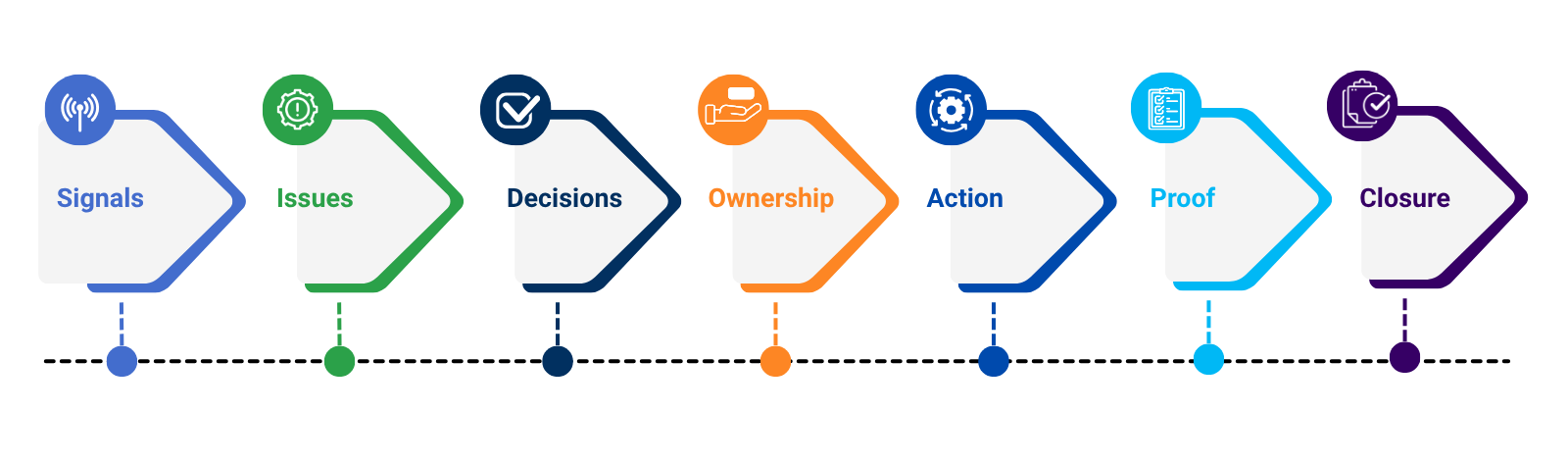
When risk reaches the organization, something should happen. Someone should know about it, own it, make the appropriate decision, complete the corrective action, provide evidence, and verify whether the risk actually improved. For fleet operators with limited time and resources, that transition may be transformational.
This Was Never Just About the Trucks
When we began this journey, it would have been easy to describe as a fleet-risk program. Today, that description feels incomplete. What we increasingly see are the businesses behind the fleets: the owner trying to keep insurance in place, the driver trying to make a living, the dispatcher trying to serve the customer without creating unnecessary risk, the fleet leader trying to understand what needs attention first, and the insurance professional trying to determine whether a company is becoming a better risk.
Nearly 200 fleet companies sounds like a milestone. Approximately 1,750 employees sounds like a statistic. Millions of miles sounds like data. But every number represents something more: a driver moving through the world, a vehicle creating productive capacity, an employee depending on a paycheck, a family depending on safe return, and a small business built through years of sacrifice, uncertainty, and hope.
Keeping the Wheels Moving
We cannot say that technology saved nearly 200 businesses. Nor should we. The truth is more meaningful than that.
These business owners fought for their companies. Their drivers continued working. Their teams responded. Insurance professionals created pathways. Partners helped identify options. And risk intelligence gave people greater visibility into what required attention and what actions could move them forward.
Our responsibility is to continue making that process more connected, immediate, understandable, actionable, and measurable. We want the owner who says, “I don’t know what to do,” to have an answer. We want the fleet manager who sees a problem to know who owns the next action. We want the driver who needs support to receive it before a preventable event occurs. We want the insurer reviewing the account to see evidence of improvement.
Because ultimately, this work is not about keeping dashboards updated or collecting more data. It is about helping people make better decisions before risk makes the decision for them. It is about keeping drivers safer, businesses insurable, employees working, families supported, communities served, and yes keeping the wheels moving.