

In This Blog:
- Why nuclear verdicts have become an everyday risk, not a rare one
- The surprising thing that now drives verdict size more than the crash itself
- Why “we have the data” and “we can prove it” are two very different things
- What “court-ready evidence” actually means, in plain language
- How fleets are turning fast, defensible evidence into their strongest legal defense
One crash can now cost more than the company is worth
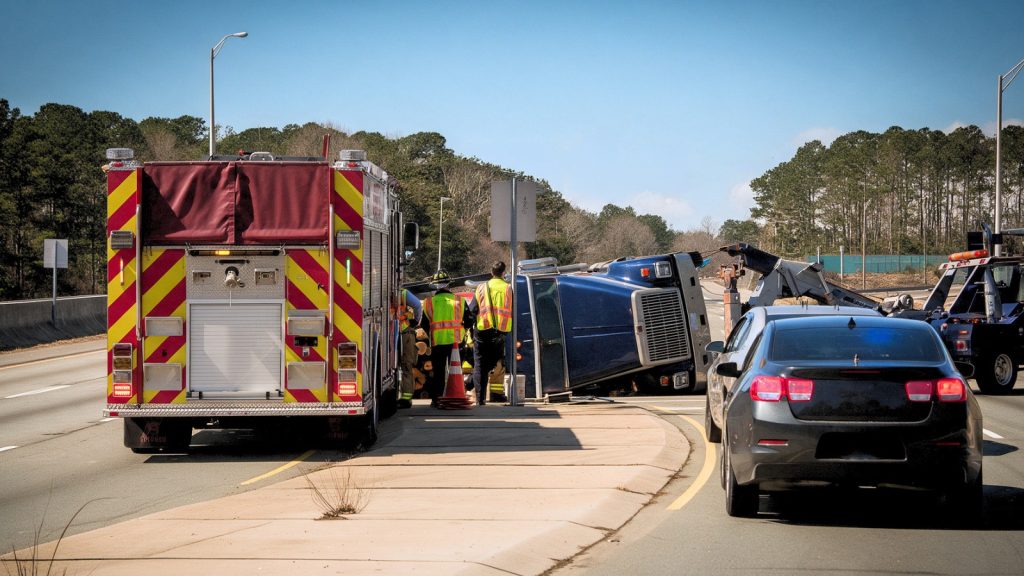
Picture a mid-size fleet. Thirty trucks, a solid safety record, drivers who’ve been around for years. One rainy afternoon, a car cuts across two lanes and clips one of their trucks. The driver did nothing wrong. Eighteen months later, a jury hands down a $30 million verdict against the fleet anyway.
That’s not a scare story. It’s the environment every fleet operates in today. And increasingly, the difference between the fleets that survive a serious incident and the ones that don’t comes down to one thing: how quickly they can prove what actually happened.
Here’s why that’s true and what the best fleets are doing about it.
Nuclear verdicts aren’t rare anymore
A “nuclear verdict” is a jury award of $10 million or more[1] . Once considered an outlier, these awards have become a defining feature of trucking risk.
The most recent industry research, the American Transportation Research Institute’s (ATRI) Trucking Litigation: A Forensic Analysis, released December 2025 found that the median nuclear verdict reached $36 million in 2022, roughly 50% higher than in 2013, while the share of verdicts topping $50 million climbed by 6.4 percentage points [1]. ATRI is the trucking industry’s own nonprofit research body, the source that carriers, insurers, and lawmakers rely on, which makes these figures about as credible as the industry gets.
The volume is just as sobering. ATRI estimated roughly 12,817 truck-related tort cases filed in state courts in 2022 alone [1]. Most never reach a courtroom but any one of them can and when it does, the fleet is instantly on the clock.
The plot twist: it’s not really about the crash anymore
Here’s the finding fleets need to sit with. ATRI’s 2025 research showed that the biggest driver of verdict size is no longer how bad the crash was, it’s pre-crash conduct and organizational failures: how a carrier hired, trained, documented, and supervised [2].
In simple terms, plaintiff attorneys have stopped arguing only “your truck hit my client.” They now argue “your company was careless long before the crash, look at your records.” Weak hiring files, missing logs, and sloppy documentation have become the ammunition. ATRI found that allegations tied to organizational failures now carry bigger financial multipliers than most things that happen on the road, and that substance-abuse or impaired-driving allegations alone were linked to an expected 340.7% increase in total awards [2]..
This completely changes what “defense” means. Your safety record isn’t just how well you drive, it’s how well you can prove how you operate. And you can’t prove it if your evidence is scattered, editable, or takes weeks to assemble.
“We have the data” is not the same as “we can prove it”
When a truck crashes, the proof of what happened is spread across a lot of places: dashcam footage, telematics (speed, braking, steering), the driver’s account, weather at the scene, and federal safety and hiring records. Most fleets already collect all of it.
That’s not the problem. The problem is that it lives in five different systems, and someone has to manually pull it together, line it up second by second, and turn it into something an insurer, a claims administrator, or an attorney can actually use while the other side is already building their story.
Think of a fender-bender on your own street. If you have clear video, a timestamp, and a witness ready to go, the insurance conversation is short. If you’re still hunting for the footage a month later while the other driver has already filed their version, you’re on the back foot. Fleets face the exact same thing, just with a lot more zeros attached.
What “court-ready evidence” actually means
The bar isn’t just “have the footage.” Every record has to withstand scrutiny of authenticity, chain of custody, completeness, and data integrity from a discovery request all the way to courtroom testimony. In practice, that comes down to six things:
- Chain of custody. Every record automatically captures who created it, who touched it, exact timestamps, and device details. Changes create new versions; originals are never overwritten. This is how you answer the question a lawyer will ask: “How do I know this wasn’t changed after the incident?”
- An immutable audit trail. A permanent, tamper-proof log of every view, edit, attachment, and approval. It can’t be quietly deleted, and it can be exported in full for legal review.
- Original evidence, preserved. Photos, dashcam footage, telematics, and weather data kept unaltered as originals, with any notes or annotations stored separately so the originals stay court-admissible.
- Legal hold. The moment a serious incident happens, the relevant records can be frozen, retention schedules paused, deletion blocked, and a clear record kept of who placed the hold. This is a make-or-break requirement in litigation.
- A documented investigation workflow. Serious and high-potential incidents follow a set path report, then evidence, then witnesses, then root cause, then corrective actions, then executive sign-off with a documented approval at every step.
- A one-click export package. When it’s time to hand everything over, the full picture – timeline, evidence, audit trail, corrective actions, and driver history exports as a clean package in PDF and evidence-package formats.
None of this is exotic. But doing it manually, consistently, across every incident, is nearly impossible which is exactly why so many fleets get caught flat-footed.
Why speed is the whole game
Put the two trends together and the picture is clear. Verdicts are increasingly decided by the quality of your documentation, and the clock starts the instant a crash happens. The fleet that can produce a complete, tamper-proof, sourced timeline in hours is negotiating from strength. The fleet still assembling evidence weeks later is negotiating from fear and paying for it.
Crashes themselves aren’t going away. In 2024, 5,218 large trucks were involved in fatal crashes and more than 120,000 in injury crashes in the U.S. [3]. Most won’t become lawsuits. But you don’t get to choose which ones do, so the only real strategy is to be ready for all of them.
How Incident IQTM helps fleets stay ready
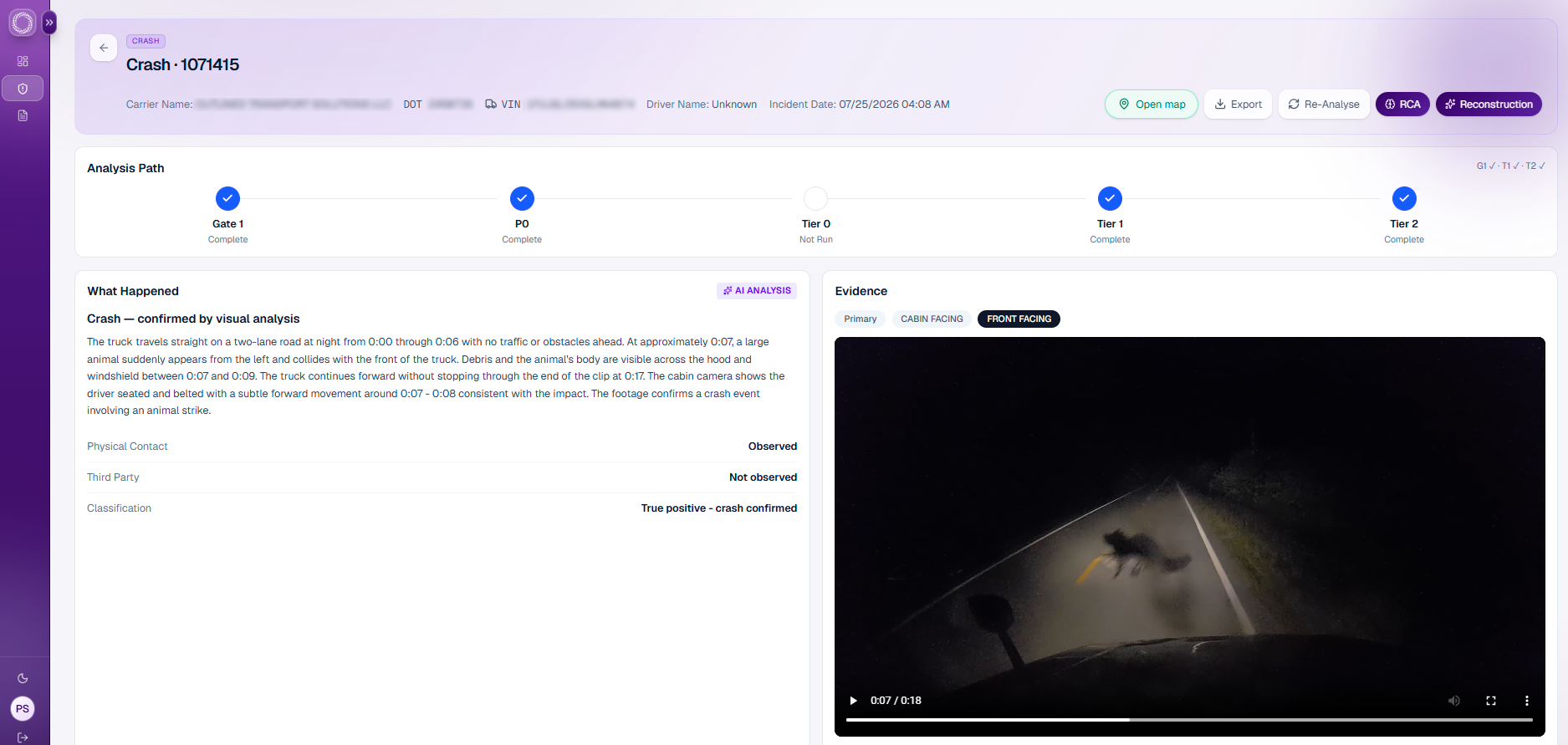
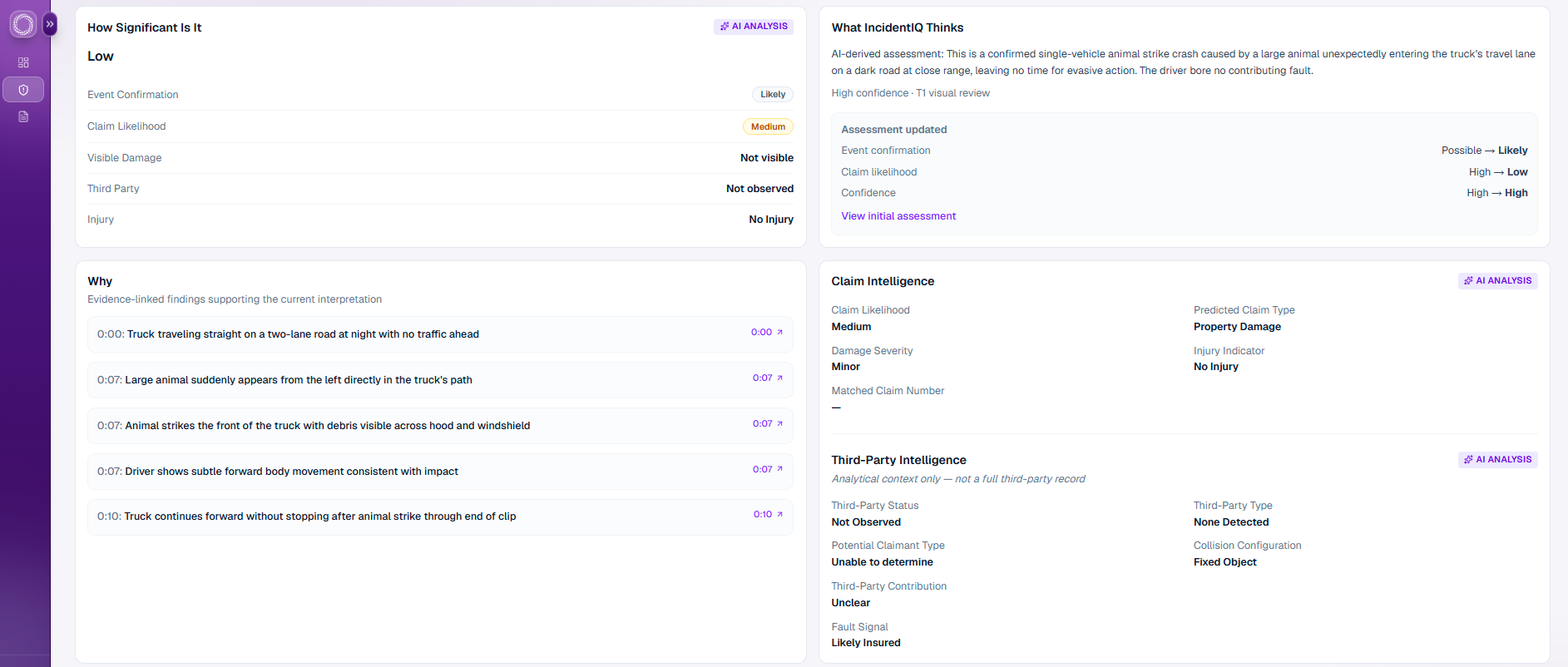
This is the exact gap Incident IQTM was built to close. It takes the evidence a fleet already collects dashcam, telematics, driver accounts, weather, and federal records and automatically assembles it into one connected, court-ready picture of an incident, with the six protections above built in rather than bolted on. Chain of custody, an immutable audit trail, preserved originals, legal hold, a documented investigation workflow, and a one-click export package all come standard so every record is built from the start to survive discovery and testimony.
Go back to that mid-size fleet from the opening. With Incident IQTM, the day after that rainy-afternoon crash, the owner isn’t digging through folders and hoping the footage saved. They already have a clear, sourced, tamper-proof timeline showing their driver stayed in their lane and the other car crossed over with the hiring and training records to back up the company’s conduct, ready to hand over before the other side even files.
Nuclear verdicts aren’t slowing down, and the research is clear that being slow and disorganized after a crash only makes them worse. Being ready with the facts fast, complete, and defensible has quietly become one of the strongest defences a fleet has. Incident IQTM is how fleets make that readiness automatic.
From an Event to Decision Intelligence
But speed alone isn’t enough. The real advantage comes from knowing which events matter, understanding what the evidence says, and recognizing which incidents could become claims.
Incident IQTM connects that journey from event qualification and AI-powered video analysis to evidence fusion, incident significance and claim intelligence, helping fleets, insurers and claims teams move from scattered incident data to faster, more defensible decisions.
References
- American Transportation Research Institute (ATRI), Trucking Litigation: A Forensic Analysis (December 2025) — median nuclear verdict $36M in 2022 (~50% above 2013); rise in verdicts over $50M; ~12,817 state truck tort cases in 2022.
- American Transportation Research Institute (ATRI), Trucking Litigation: A Forensic Analysis (December 2025), as reported in FreightWaves, “ATRI: Pre-crash negligence triples trucking company liability” — organizational failures now outweigh crash severity as a driver of verdict size; substance-abuse/impaired-driving allegations linked to a 340.7% increase in awards.
- National Safety Council, Injury Facts — Large Trucks (analysis of NHTSA FARS and CRSS 2024 data). ; U.S. DOT / NHTSA, Large Trucks: 2024 Data. https://crashstats.nhtsa.dot.gov/